According to the Cuban government, more than 1,500 activists and representatives of solidarity organizations from over 60 countries across Latin America, Europe, Africa, and Asia traveled to Cuba this week to participate in events commemorating Fidel Castro.
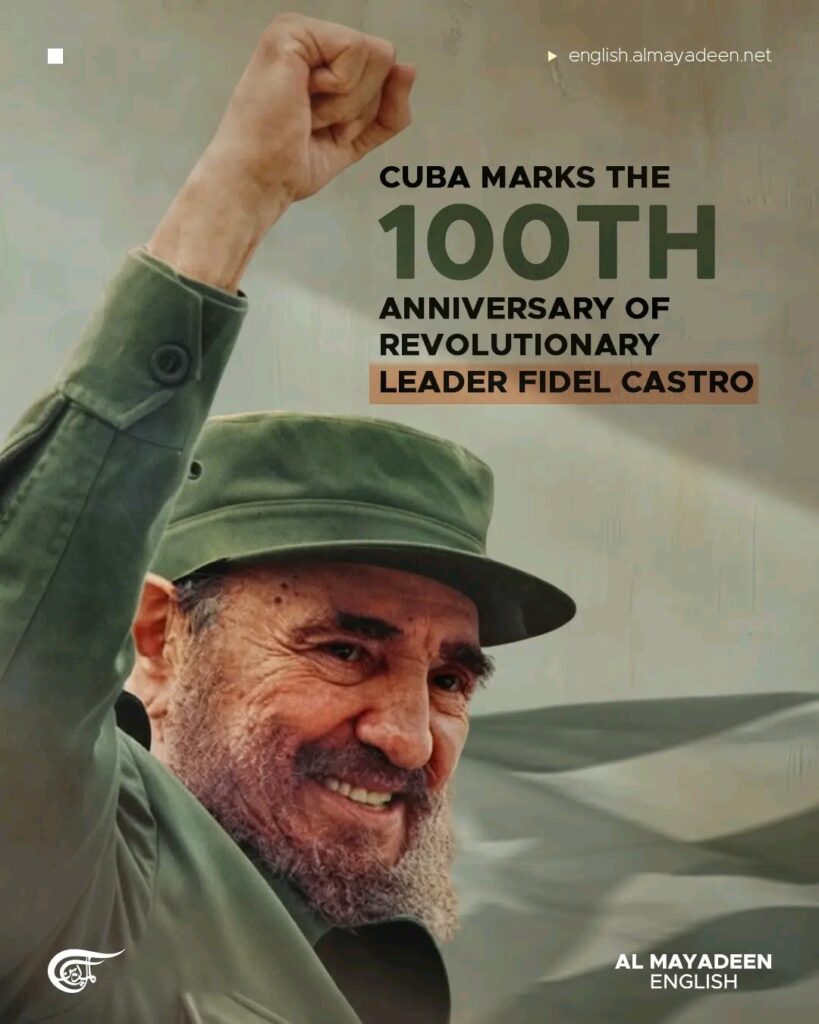
Writer and essayist Miguel Barnet, who is also a member of Cuba’s National Assembly, told The Associated Press, “I believe [Fidel Castro] leaves Cuba a legacy of dignity, morality, tireless work, and concern for the poor.”
Barnet added that Castro also left behind “a philosophy that was translated into concrete policies in areas such as culture, education and public health.”
For many, Castro’s impact extends beyond Cuba, with supporters around the world continuing to view him as a symbol of resistance and revolution. Castro led the Cuban Revolution of 1959 and remained one of the most influential figures on the international left for decades before his death in November 2016.
His political legacy remains a central reference point in Cuba and Latin America, as well as among revolutionary and solidarity movements around the world.