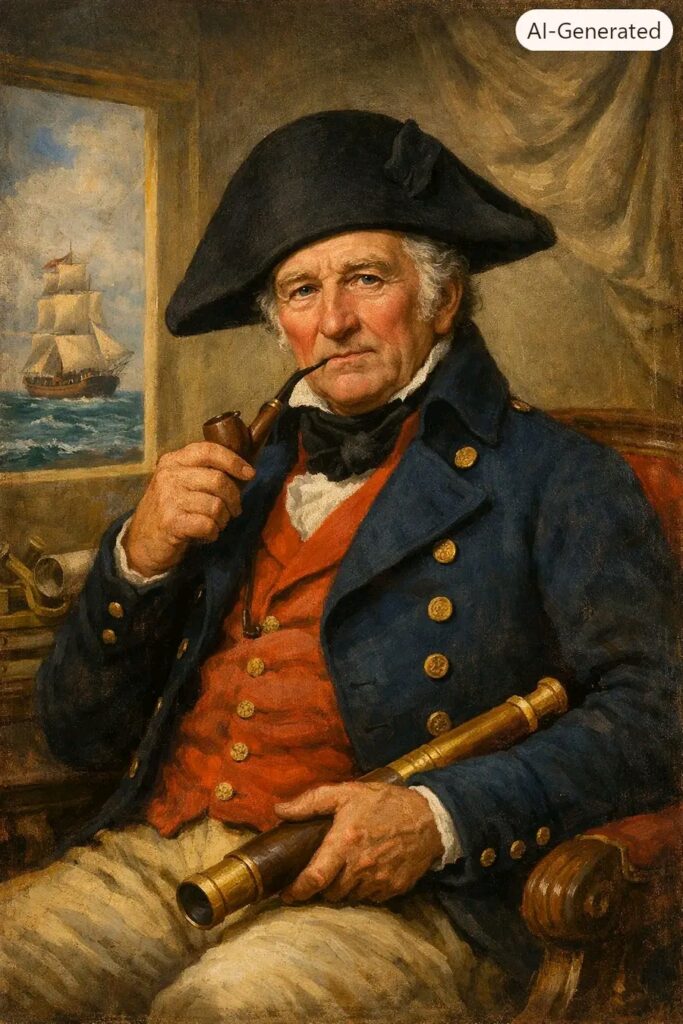
Captain Hugh Crow (c. 1765 – 13 May 1829) was a British privateer and slave trader. He was captain of several merchant vessels in the African trade, and his memoirs, published posthumously, are notable for their descriptions of the west coast of Africa.
Today, “Atam” is an Efik term used to describe the peoples of northern Cross River. The name originates from “Ofon Atam,” a village in Ikom, Cross River State. These people, along with those from the surrounding Obubra area, traded with the Efiks. These trade links coincided with the transatlantic slave trade.
The word has gone through several spelling variations over the years. The first recorded instance of Atam on paper was as “Otham” in western Jamaica in 1792. There were early 19th-century mentions of the name in St. Lucia (Otam), Jamaica (Ottam), Guyana (Atam), St. Kitts (Attam), and Sierra Leone (Atam).
We know these were northern Cross Riverine peoples because:
- Ottam/Otham/Attam all appear in the Caribbean around the same time. 2. Hugh Crow, a slaver operating in the Bight of Biafra, places the “Ottam/Tams” north of the “Quaws” (who he also says are called Mocos) in the early 1800s. In 1848, Ottam was listed as being near Moko country. 3. The Atam in Sierra Leone were confirmed as being from northern Cross River (Boki, Akunakuna, etc.).
All of this confirms that the 19th-century Atlantic use of Otam/Atam referred to northern Cross River peoples. The peoples labeled as Atam/Otam, who were traded through Ikom and taken to Biafran ports, included the Ejagham, Boki, Mbembe, Ezza and Izzi-Igbo, Yala, Agoi, Kohumono, Nkukoli, Mehu, Unaghana, Umon, Tiv, Igala, Idoma, and others. There were no rigid borders between Igbo-speaking peoples and Cross Riverine peoples at that time.
From the previous account, it is clear that this was a broad designation that included groups who are not from the present-day Cross River State of the 20th and 21st centuries.
Atam is often used as a slur today, but it functions as a pan-ethnonym in which the negative stereotypes point back to the slave trade. The Efik, who call themselves “Mbakara,” historically sold these peoples and would come to view those they sold as lesser.
This history echoes powerfully in the Caribbean. Cunha Cunha is a famous mountainous tourist pass in Jamaica, and many people in Nigeria are unaware of the deep historical ties between Jamaica and Nigeria. During the infamous Atlantic Slave Trade, millions of enslaved people were transported from the present-day Cross River Basin in Nigeria and the Republic of Cameroon to Jamaica.
Recently, a Jamaican cultural researcher and student of Afro-Jamaican and West African history messaged me via Messenger. He was curious about the people the Efik refer to as Attam. He said colonial records in Jamaica make references to Oban, Attam, Boki, Enyiong, Eburutu, and Efik, and mentioned that his village is close to a town in Jamaica called Calabar.
As our discussion deepened, he asked if I was familiar with the Cunacuna (also known as Akunakuna). I explained that the Akunakuna are the Agwagwune people from Biase Local Government Area of Cross River State, and that they have ancestral ties to the Yakurr. Interestingly, the Ugep people of Yakurr refer to the Agwagwune as Yakungwune, a name that emphasizes their intertwined cultural and historical heritage.
He then revealed that Cunacuna is a settlement in Jamaica founded by people from Agwagwune, and I was absolutely thrilled.
The Agwagwune are a riverine people located along the banks of the Middle Cross River, and they held strategic control of the river in both the Middle and Upper Cross River regions during the transatlantic slave trade period, until the onset of colonialism. The Ikom monoliths are a testament to this enduring Atam heritage — a history that is only now beginning to be widely discussed.
@ Okoi Obono-Obla