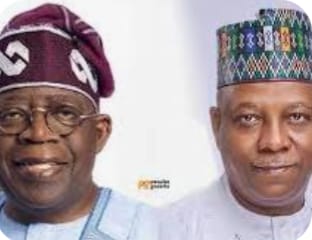
*The Politics of Religion: Who Benefits From the Jingir Speech*By Idowu Ephraim Faleye +2348132100608Sometimes, the most important question in politics is not who made a statement, but who benefits from the consequences of that statement. This is the question Nigerians should be asking about the recent remarks attributed to Sheikh Sani Yahaya Jingir in Kano, where he strongly defended the Muslim–Muslim ticket and called on Muslims to demonstrate their numerical strength through their votes. His words have already provoked strong reactions from Christian leaders and political figures, including former Kano State Governor Rabiu Kwankwaso, showing that what began as a religious intervention has quickly entered the political arena.Let us be clear from the beginning: there is no evidence before us that Sheikh Jingir was instructed, sponsored or planted by anybody to make the speech. It would therefore be irresponsible to claim that the speech was a deliberate conspiracy against President Bola Ahmed Tinubu. But politics does not always require a conspiracy before somebody benefits from an event, because a statement made for one purpose can be used by another person for an entirely different purpose. The more important question, therefore, is not simply why Jingir said what he said, but what political consequences his words could produce and who stands to gain from those consequences.The timing makes the question even more important. Nigeria is moving towards another presidential election in 2027, and religion remains one of the strongest forces capable of influencing political behaviour across the country. Tinubu’s decision to run a Muslim–Muslim ticket with Kashim Shettima in 2023 already created a serious concern among some Christian voters, even though the President has repeatedly presented his government as a government for all Nigerians. Now, when a prominent Islamic cleric publicly argues that Muslims should maintain the Muslim–Muslim arrangement and speak in language that some Christians can interpret as religious dominance, the political consequences can reach far beyond the original speech.This is where the first question becomes unavoidable: who gains if Christians across Nigeria become convinced that the Tinubu administration is pursuing a Muslim-dominance agenda? The answer is not necessarily one person or one political party. Any political actor trying to weaken Tinubu’s support among Christians could benefit from such a perception, because it would move the conversation away from economic performance, infrastructure, security, reforms and governance and towards the much more emotional question of religious identity.That would be a major political advantage for Tinubu’s opponents. An opposition candidate does not necessarily need to prove that Tinubu is actually pursuing an Islamisation agenda if enough voters become convinced that he is. In politics, perception can become more powerful than evidence, particularly when the issue touches religion, identity and fear. Once voters begin to see an election as a struggle between religious groups rather than a choice between competing policies and candidates, every political disagreement can easily acquire a religious meaning.But there is another side to this equation. The same religious mobilisation that could frighten Christian voters could also strengthen Tinubu among Muslims who feel that their religious identity is being attacked. If Muslims interpret the controversy as an attempt to deny them the right to support Muslim candidates, they may become more politically defensive and more determined to protect the Muslim–Muslim ticket. This means that the Jingir controversy does not automatically benefit Tinubu’s opponents; it could also deepen Muslim solidarity behind him.That is why the speech should not be viewed as a simple pro-Tinubu or anti-Tinubu event. It is better understood as a potential political trigger that can produce different reactions among different communities. The central political question is therefore which reaction becomes stronger: Muslim consolidation behind Tinubu or Christian alienation from him. The answer may depend less on Jingir himself and more on how politicians, religious leaders, media organisations and social-media networks interpret and amplify his words.There is, however, a much bigger issue behind this controversy, and that is the economic and institutional transformation taking place under Tinubu. Since May 2023, the administration has introduced some of the most disruptive economic reforms Nigeria has experienced in many years, including the removal of the petrol subsidy and major changes to the foreign-exchange system. The International Monetary Fund says these reforms have improved macroeconomic stability, reduced fiscal vulnerabilities and strengthened the functioning of the foreign-exchange market, while also acknowledging that inflationary pressures and poverty remain serious concerns.This is where political analysis must move beyond the ordinary argument about whether Tinubu’s reforms are good or bad. Every major reform creates winners and losers, and sometimes the losers are not only poor citizens who experience higher prices. They can also include businesses, intermediaries, contractors, political networks, government beneficiaries and powerful interests whose access to the old system has been reduced. A reform can therefore create economic benefits for the country while simultaneously creating political enemies for the government implementing it.Consider the fuel subsidy. Before its removal, the subsidy system had become deeply embedded in Nigeria’s political and economic structure, with longstanding arguments about leakage, corruption, smuggling and unequal benefits. The removal created significant fiscal space for the government, but it also produced an immediate and painful increase in living costs, particularly through higher transportation and food prices. Even current reporting shows that Nigerians continue to feel the effects of the reforms in their daily lives, despite signs of improved macroeconomic conditions.The foreign-exchange reform created another disruption. Nigeria previously operated with multiple exchange-rate windows and significant opportunities for arbitrage and preferential access to foreign exchange. Unifying and liberalising the market changed the environment in which businesses, importers, traders and other economic actors operated. Some people gained from a more transparent system, while others who benefited from the old distortions had reasons to be uncomfortable with the new arrangement.This gives us a useful political-intelligence model: Tinubu reform, affected interest, expected loss, political reaction, religious narrative, mobilisation and electoral consequence. We should not assume that every person affected by a reform will turn to religion, because that would be an unfair and unsupported conclusion. What we should investigate is whether economic and political grievances are being gradually translated into regional or religious narratives that can mobilise people more effectively than the original economic complaint.For example, an individual may initially complain that the removal of subsidy has increased transportation costs. That is an economic complaint. But if the complaint is later presented as evidence that a particular government does not care about a particular region, it becomes a regional political complaint. If it is then presented as evidence that a particular religious group controls the government and is deliberately disadvantaging another religious group, the original economic grievance has become a religious political narrative.That transformation is where the real danger lies. Economic hardship can be debated, negotiated and addressed through policy, but religious fear is much harder to manage because it touches identity, belonging and survival. Once people are convinced that their religion is under political threat, they may begin to support candidates not because of their records but because they believe those candidates will protect their group.This is why we must ask a difficult question about Northern Nigeria without making the mistake of treating the North as one political bloc. Northern Nigeria contains farmers, traders, professionals, businessmen, civil servants, traditional rulers, religious leaders, young people, political elites, opposition politicians and millions of ordinary citizens with different interests and different opinions about Tinubu. In fact, recent Northern stakeholder meetings have also produced public support for the continuation of Tinubu’s reforms, showing that opposition to the administration cannot honestly be described as a united Northern position.The more useful question is therefore not whether “the North” is angry with Tinubu. The question is which specific interests have been disrupted, which groups have gained, which groups have lost influence or access, and which political actors are uncomfortable with the new arrangement. Someone may not have lost money but may have lost access to government patronage. Another may not have lost a business but may have lost political influence. Another may simply be angry because a policy has changed the economic environment in which he was comfortable.This is why the language of “reform winners” and “reform losers” must include political power, not only money. Government reforms can change who has access to contracts, foreign exchange, subsidies, appointments, public institutions, government programmes and political influence. When such changes occur, some interests will naturally defend the old system while others will defend the new one. The political battle may therefore be much larger than the public argument we see on television.Now return to Jingir’s speech. His message moves the conversation from Muslim identity to Muslim political solidarity and then to voting behaviour. The reported remarks urging Muslims to “correct” their votes and demonstrate their numerical strength are particularly important because they turn religious identity into an electoral instrument.That is the point at which the matter becomes more than a cleric expressing a personal religious preference. It becomes political mobilisation. And once political mobilisation is organised around the idea that Muslims must demonstrate their strength against another religious group, the other group can respond by organising around its own identity.This is how polarisation works. One side says, “We must protect our people,” and the other side eventually says, “We must protect our people too.” Before long, the election stops being primarily about who can govern Nigeria better and becomes a referendum on which religious community has greater political power.And this leads us to perhaps the most interesting paradox in the entire Jingir controversy. Someone who believes he is defending the Muslim–Muslim ticket may actually be weakening the political foundation on which that ticket depends. The Muslim–Muslim ticket can survive politically only if enough Nigerians, including Christians, believe that having two Muslim leaders does not mean that the government belongs to Muslims alone.But when public rhetoric suggests that Nigeria is fundamentally a Muslim country, or that Christians who reject Muslim–Muslim politics should leave, the message heard by many Christians can be very different. They may conclude that the fears expressed during the 2023 election were justified. Recent reactions from Northern Christian leaders show that this is already becoming part of the political conversation.This creates a remarkable political contradiction. The more aggressively the Muslim–Muslim ticket is defended as a religious entitlement, the more it can frighten the very Christian voters whose acceptance is necessary for the ticket to remain nationally competitive. In trying to consolidate one side, the rhetoric can unintentionally mobilise the other side. In trying to demonstrate Muslim strength, it can create Christian resistance.That is precisely why political actors who oppose Tinubu could find the controversy useful even if they had nothing to do with Jingir’s original speech. They do not need to create the message if the message already exists. They only need to amplify the most frightening parts of it, connect them to Tinubu and Shettima, repeat them across social media and persuade Christian voters that the 2027 election is a battle against religious dominance.But we must also apply the same standard to those who support Tinubu. It would be equally dangerous to dismiss every criticism of the speech as an opposition conspiracy. Christians who are disturbed by such language may be genuinely disturbed. Muslims who support a Muslim–Muslim ticket may genuinely believe they are exercising their democratic rights. The existence of political consequences does not automatically prove political manipulation.That is why data becomes important. Instead of arguing endlessly about whether the speech is a conspiracy, investigators can examine what happened after the speech. Who first uploaded the video? Which accounts amplified it? How quickly did it spread? Which phrases became viral? Who converted the religious statements into political messages? Which politicians responded first? Did the same talking points appear across apparently independent platforms at almost the same time?Those questions can turn speculation into evidence. If the data shows that the speech spread organically because Nigerians were shocked by it, then we have a religious intervention that generated a spontaneous political reaction. If, however, the evidence shows coordinated amplification, repeated identical narratives, organised influencer activity and political actors strategically pushing the same message across different platforms, then the possibility of deliberate political exploitation becomes much more serious.The same data-driven approach should be applied to Tinubu’s reforms. We should map each major reform against the interests affected by it and ask what changed before and after the reform. We should identify who gained, who lost, who complained, who mobilised and whether the language of the complaint later changed from economic or institutional criticism into religious or regional mobilisation.The resulting model would be simple but powerful: reform creates disruption; disruption creates affected interests; affected interests create grievances; grievances create political narratives; narratives can acquire religious meaning; religious narratives mobilise voters; and voter mobilisation produces electoral consequences. The purpose is not to prove that this chain is happening, but to test whether the evidence supports it. That is the difference between political intelligence and political speculation.There is also another uncomfortable possibility. The controversy may benefit several competing groups at the same time. A Tinubu supporter may use it to consolidate Muslim voters, an opposition politician may use it to frighten Christian voters, a religious hardliner may use it to increase his influence, and a disaffected political elite may use it to deepen public anger against the government. One event can therefore produce multiple beneficiaries, even when those beneficiaries have completely different political objectives.This is why asking “Who is behind Jingir?” may actually be the wrong question. The better question is “Who benefits from what Nigerians are being encouraged to believe about Jingir?” If the answer is that the speech causes Nigerians to see one another primarily as Muslims and Christians rather than as citizens evaluating a government, then the political beneficiary may be whoever is best positioned to exploit that division.That creates an opening for political opponents. If they cannot defeat the reform argument on economic performance alone, they may have an incentive to shift the political conversation towards identity, region and religion. The government, on the other hand, has an equally strong incentive to prevent the election from becoming a referendum on religious identity, because Tinubu needs a coalition that reaches beyond one religious community.The Jingir controversy therefore sits at the intersection of three powerful forces: reform, identity and elections. Tinubu’s reforms are changing economic and political relationships; the 2027 election is approaching; and religion remains one of the easiest ways to convert public anxiety into mass political mobilisation. That combination makes every religiously charged political statement more consequential than it might appear on the surface.The greatest danger is not that one cleric supports a Muslim–Muslim ticket. People have the right to support candidates based on religion, ethnicity, region, ideology or any other lawful political preference. The danger begins when political competition is transformed into a contest over who owns Nigeria and who belongs in Nigeria.Nigeria does not belong to Muslims, Christians, Northerners or Southerners. It belongs to Nigerians. A Muslim can support a Muslim candidate, a Christian can support a Christian candidate, and both can still recognise that the presidency is a constitutional office meant to serve citizens of every faith and region.This is also why those defending the Muslim–Muslim ticket need to think carefully about the language they use. If their objective is to keep Tinubu and Shettima politically competitive, rhetoric that makes Christians feel like outsiders may achieve the opposite of what they want. It could give the opposition a powerful political weapon and turn a ticket designed to unite a winning coalition into a symbol of religious division.At the same time, Christians and opposition politicians must also resist the temptation to generalise from one cleric to millions of Nigerian Muslims. The political success of a divisive statement depends on the reaction it generates. If Nigerians respond by rejecting religious hatred from whichever side it comes, the statement loses much of its political power. If Nigerians respond by organising themselves into opposing religious camps, the person who made the statement may have achieved far more than he intended.That is why the question of who benefits deserves serious attention before the 2027 election becomes fully defined by identity politics. We should examine the speech, but we should also examine the interests surrounding the speech. We should examine Tinubu’s reforms, but we should also examine who those reforms disrupted. We should examine political reactions, but we should also examine who gains when economic grievances are converted into religious grievances.Perhaps, in the end, the most revealing question is not whether Jingir intended to help or hurt Tinubu. It is whether the political environment created by his words will make Nigerians vote more on the basis of religious fear or on the basis of government performance. If the former happens, the real winner may not be Tinubu, Jingir or the opposition, but the political forces that have always benefited whenever Nigerians are divided against themselves.The 2027 election should therefore not become a competition over which religion owns Nigeria. It should be a competition over who can provide security, jobs, affordable food, reliable infrastructure, economic opportunity and competent government. The reforms introduced by Tinubu should be judged by the benefits they eventually produce and who actually receives those benefits.And the Jingir controversy should be watched for what it becomes next. If it remains one cleric’s controversial political-religious intervention, it will eventually lose its power. But if it becomes a coordinated national narrative that turns Muslims against Christians, Christians against Muslims, Northerners against Southerners and citizens against one another, then Nigeria will have to ask a much more uncomfortable question: who benefits when the people stop asking what the government is doing and start asking which religion should control the government?That is the real political intelligence question behind the Jingir speech. It is not simply who made the statement. It is who benefits from the political reality the statement may create.*Idowu Ephraim Faleye is a freelance political writer based in Ado-Ekiti, Nigeria +2348132100608*